
Loading...
Serving Brea, CA and surrounding areas. (657) 478-7151
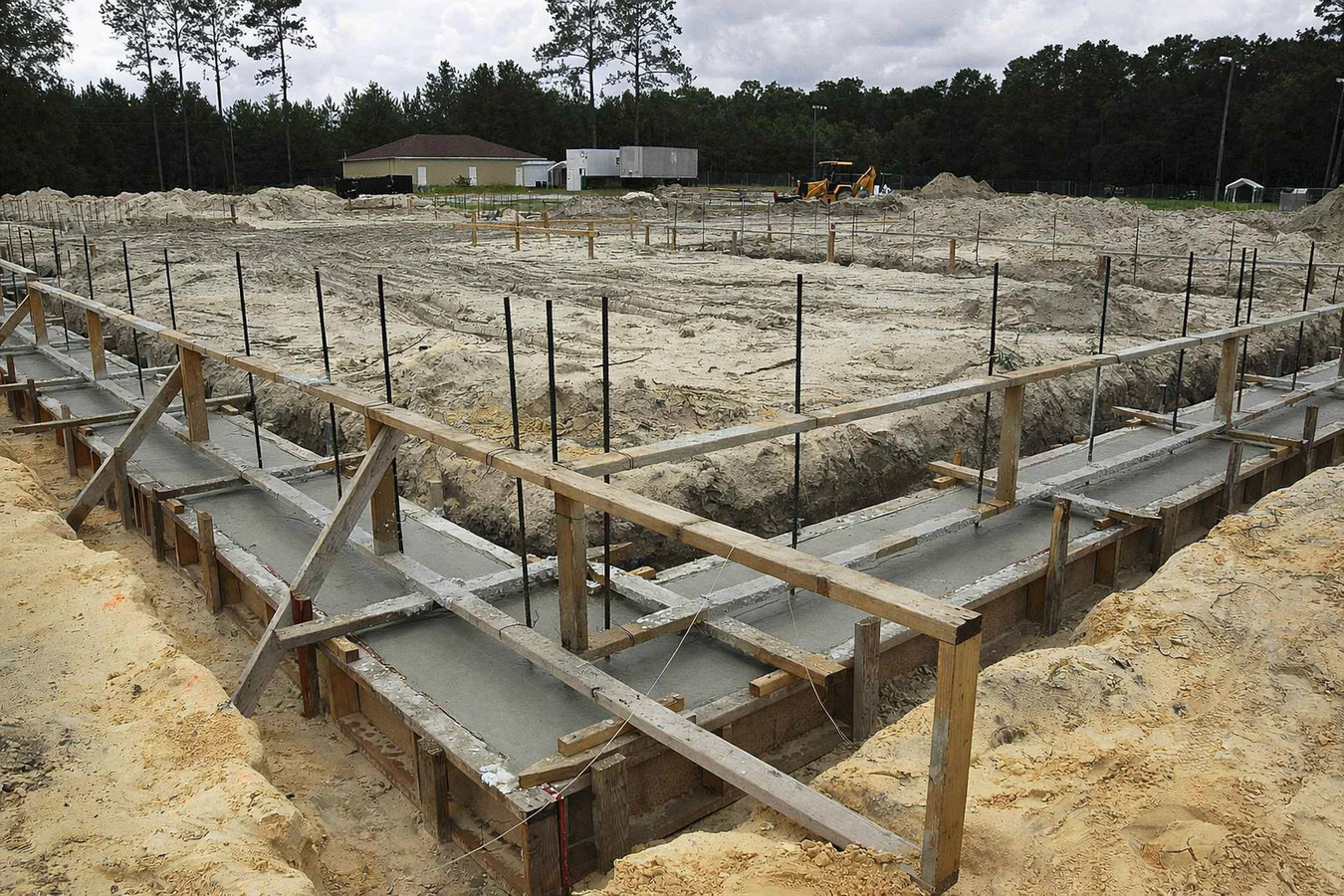
Everything above ground depends on what is below it. We install concrete footings in Brea built for local clay soils, seismic requirements, and city permit compliance.
Concrete footings in Brea, CA are the underground bases that anchor decks, retaining walls, room additions, and other structures to stable ground, and most residential footing jobs take one to three days of active work before curing begins.
Think of a footing as the feet of a structure - if they are not solid and at the right depth, everything above them shifts, cracks, or leans over time. In Brea, that is not just a theory. Clay-heavy soils in many neighborhoods swell when wet and shrink when dry, and a footing that was not designed for that movement will show it within a few years. Any structure attached to or built near your home needs a properly engineered footing to stay stable.
If you are also adding a larger structure that requires a full base pour, our foundation installation service covers full foundation scopes, and we can help you understand which approach your project actually needs.
Diagonal cracks running from the corners of door frames or windows, or cracks in your concrete floor that seem to be growing, are often a sign that something below the surface is shifting. In Brea, this is frequently tied to the expansive clay soils that swell and shrink with seasonal moisture changes. It does not always mean a catastrophic problem, but a professional should assess what is happening at the foundation level.
When a footing shifts, the frame of the building moves with it - and doors and windows are usually the first place you notice. If a door that used to swing freely now drags on the floor or a window suddenly feels stiff in its frame, the cause may be movement in the footing below. This is especially common in Brea homes built before the 1980s, where older footings may not have been designed for today's soil movement standards.
Any new structure attached to or built near your home needs its own footing to support it safely. If you are getting quotes for a deck or covered patio in Brea, the contractor will install new footings as part of that project - Brea's building department requires it as part of the permit. This protects your investment and ensures the new addition stays stable for decades.
Retaining walls hold back soil, and when the footing beneath one starts to fail, the wall begins to tilt. If you have a retaining wall in your yard - common in Brea's hillside neighborhoods - and it is leaning even slightly away from the soil it holds, the footing likely needs to be replaced or reinforced before the wall fails entirely.
We handle footing work from the first site visit through the final city inspection. That includes utility marking coordination (calling 811 before any digging starts), excavation to the required depth, wood or metal form setting, steel reinforcement placement, and the pour itself. We apply a curing approach that accounts for Brea's summer heat - scheduling pours for cooler parts of the day and keeping the concrete moist during the critical early days when the slab is gaining its strength. We also file permits with the City of Brea Building Safety Division and coordinate the pre-pour inspection so the city can verify reinforcement placement before concrete covers it. If your project also needs a full foundation pour - for a larger addition or a new structure - our foundation installation service covers that scope.
Footing design is not one-size-fits-all in Brea. Hillside lots near Carbon Canyon often require deeper footings and more reinforcement because the soil there is more active. Properties in older neighborhoods may have existing footings that need to be assessed before anything new is attached to them. And any project near a seismic fault zone - which includes most of Brea - needs reinforcement specified to local code, not just a generic residential spec. For projects that also involve adjacent concrete surfaces, our foundation raising service can address situations where an existing structure needs to be elevated or releveled.
Suits homeowners adding a deck, pergola, or attached patio cover that requires anchored footings per Brea building code.
Suits hillside properties in Brea where retaining walls hold back sloped soil and need a deep, reinforced footing base.
Suits homeowners adding a bedroom, bathroom, or living area that requires new footings tied to the existing foundation.
Suits homeowners building a detached accessory dwelling unit, garage, or workshop that needs its own independent footing system.
Two conditions make footing work in Brea genuinely different from many other markets. The first is the soil. Much of Brea, particularly in neighborhoods closer to the Puente Hills and Carbon Canyon, has expansive clay soil that swells when it gets wet and shrinks back when it dries. That push-and-pull is a leading cause of shifted footings and cracked structures throughout northern Orange County. A footing designed without accounting for that soil behavior will eventually move - it is only a question of when. The City of Brea Building Safety Division requires a permit and a pre-pour inspection for most footing work specifically because that independent check is the best protection a homeowner has against work that cuts corners underground where you cannot see it. Property owners in Yorba Linda face the same soil conditions, and we serve both areas regularly.
The second condition is seismic activity. Brea sits in a seismically active part of Southern California, and local building code sets reinforcement requirements for footings that are stricter than national averages. More steel, more specific tie-in details, and deeper embedment are common requirements here. Brea also has a significant number of homes built in the 1950s through 1970s with footings that predate today's standards - if you are adding to one of those homes, the existing footing needs to be assessed before new work is attached. We also work in Diamond Bar, another hillside community where these same soil and seismic factors shape how footing work is done.
We respond to all new inquiries within one business day. Footing pricing depends on your soil, slope, and what is being built - so we schedule a free on-site visit before giving you any numbers. A quote over the phone without seeing your property is not a reliable number.
After the site visit, you receive a written, itemized estimate covering labor, materials, and permit fees. We file the permit application with the City of Brea Building Safety Division on your behalf - expect a few business days for approval before digging can begin.
The crew marks utilities, digs to the required depth, sets forms, and places steel reinforcement. Before any concrete is poured, the city inspector checks the work. That inspection is what gives you confidence that the footing is correct - and it is required by Brea code.
Concrete is poured, smoothed, and protected during curing. Keep the area clear for at least 24 to 48 hours. Once cured and any required final inspection is complete, you receive the permit documentation and your footing is ready to build on.
We visit your property, assess your soil and slope, and give you a written quote - no phone guesses, no obligation.
(657) 478-7151We work in Brea and the surrounding hill communities every week. We know that the clay soils here move with the seasons, and we design every footing to account for that movement - right depth, right reinforcement, right connection to what is being built above it. That local knowledge is why our footings do not come back as problems five years later.
Southern California building code requires footings to be reinforced for earthquake loads - and Brea's requirements are stricter than many areas. We build to those specs every time, not to a minimum that might pass inspection but not hold up in a real event. The California Geological Survey documents the seismic hazard zones that shape these requirements.
We file with the City of Brea Building Safety Division, coordinate the pre-pour inspection, and hand you the permit record when the job is done. That paperwork protects your home's value and proves the work was done correctly - which matters at resale and in any dispute. City of Brea Building Safety Division
Many Brea homes were built in the 1950s through 1970s, and older footings do not always meet current seismic or soil standards. Before we attach anything new to your existing structure, we assess what is already there and tell you honestly what we find - including if reinforcement or replacement is needed before your addition is safe to build.
A footing is the part of your project that no one ever sees again after it is poured - which is exactly why it has to be done right the first time. That is the standard we hold ourselves to on every job in Brea.
Lifting and releveling existing structures in Brea where foundation settlement has caused the building to shift or sink.
Learn MoreFull foundation pours for new construction and large additions where a complete base system is required.
Learn MorePermit approval and scheduling take time - reach out now so your project stays on track and does not wait for the next available window.